The 1969 Melbourne–Eau Gallie merger
Two adjacent Florida cities, separate schools and separate police, voted to combine in 1969. Here's why it happened, how close it came to failing, and what Melbourne is still living with.
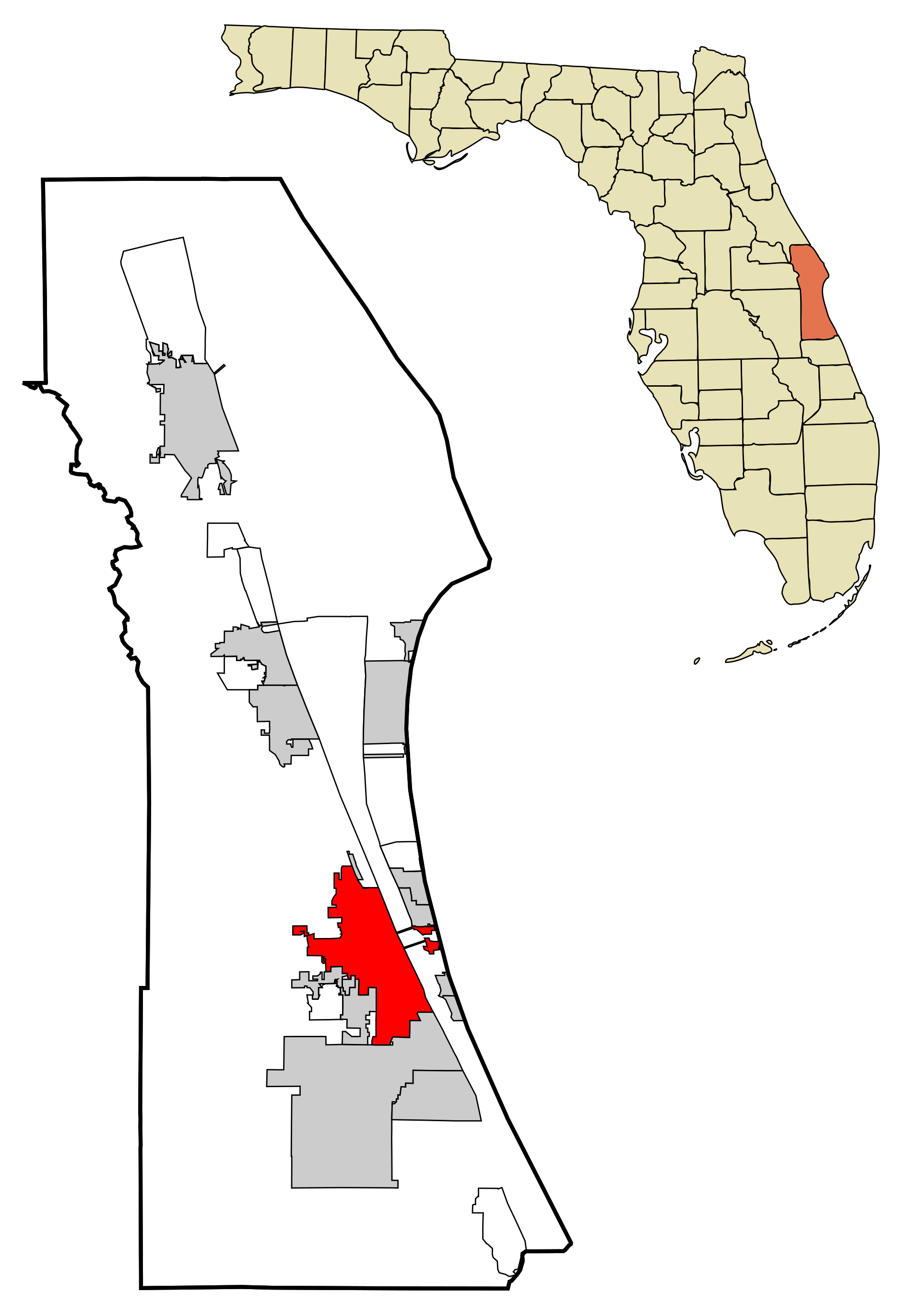
On July 1, 1969, the cities of Melbourne and Eau Gallie ceased to exist as separate municipalities and a new, consolidated City of Melbourne came into being. The merger was ratified by a special act of the Florida legislature (Chapter 69-1351) after concurrent referendum votes in each city in November 1968. Both votes passed, but Eau Gallie’s only by a margin of 246 ballots. The thing nearly didn’t happen, and the version of Melbourne we have now is the result.
This article walks through the why, the how, and the still-visible consequences.
The why
Three pressures forced consolidation onto the agenda.
1. Adjacent fast growth. Between 1950 and 1965, Melbourne’s population went from 4,233 to roughly 14,000. Eau Gallie’s went from about 2,200 to 13,000. By the mid-1960s the two cities were continuous on the ground, sharing a shopping center boundary on what’s now Eau Gallie Boulevard, sharing a high school catchment, and sharing essentially every utility customer’s service line. The cities had grown into each other.
2. Duplicative infrastructure. Two separate police forces patrolling adjacent streets. Two separate fire departments responding to calls that might be a hundred yards apart. Two water systems with interconnections that nobody had documented properly. Two zoning maps that contradicted each other along the boundary. Two ad valorem tax bases that taxed essentially identical properties at different rates.
3. NASA money and the aerospace boom. Patrick Air Force Base and the Cape were dumping federal contracts into the area. Brevard Engineering College (now FIT) was growing fast. The new defense employers (Radiation Inc., later acquired by Harris and Harris Corp., later L3Harris) needed to negotiate with one city, not two, when planning facility expansions. The county-wide consensus was that fragmented municipalities were going to lose contracts to other parts of Florida that could move faster.
The how
The 1968 merger proposal had been preceded by failed attempts in 1957 and 1963. The 1957 attempt died in committee. The 1963 attempt got to a referendum in Eau Gallie and lost by 412 votes. By 1967 the pressure had built enough that the chamber of commerce, the school board, and the county commission all backed a new push.
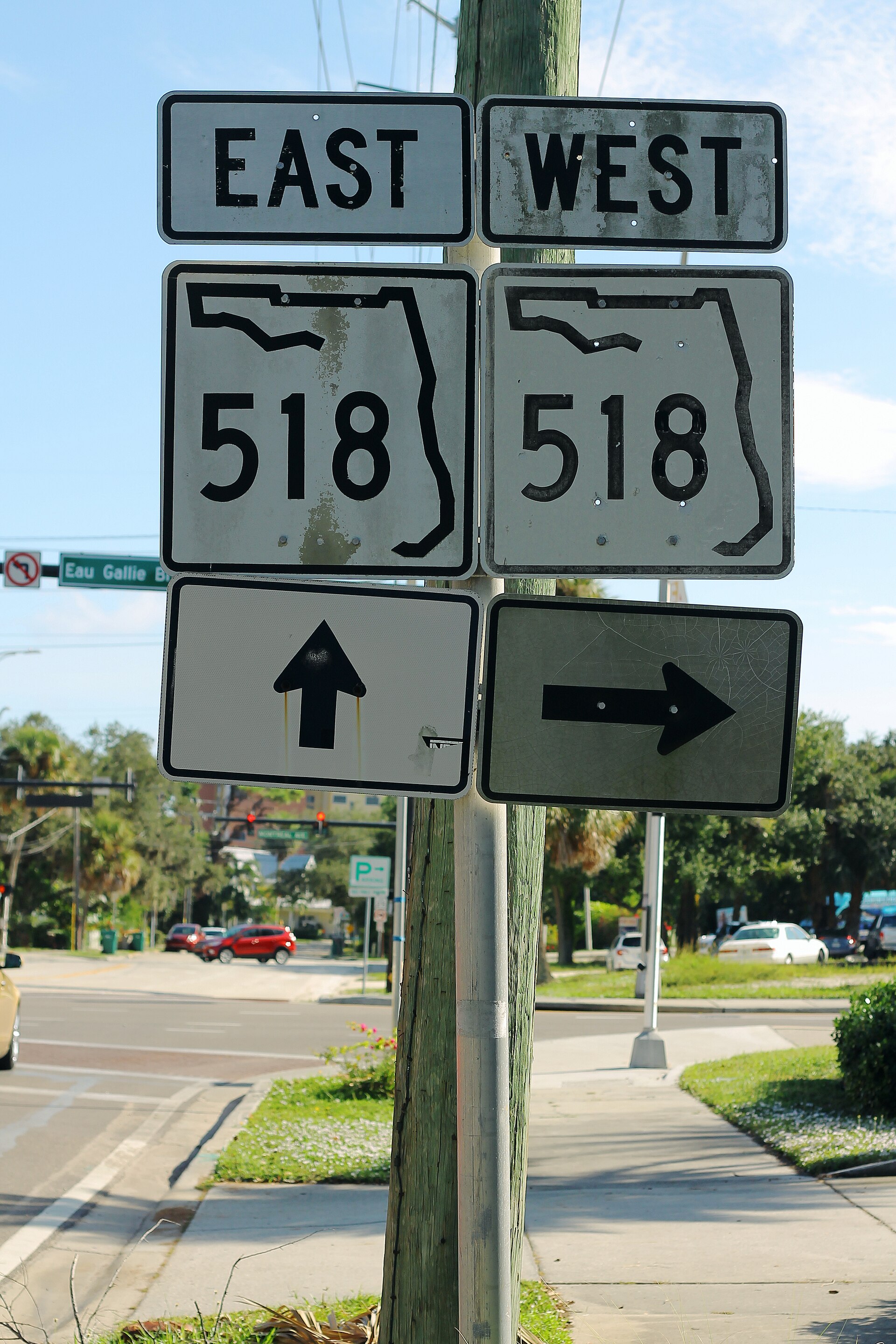
The actual mechanics: a joint study commission was established in early 1968. It produced a draft charter for the merged city by June. The draft was a careful compromise. It preserved Eau Gallie’s place names (Eau Gallie Boulevard, the Eau Gallie Causeway, the Eau Gallie Library). It gave Eau Gallie council representation on the new combined council. It established a phased budget transition so Eau Gallie taxpayers wouldn’t immediately absorb Melbourne’s older debt and Melbourne taxpayers wouldn’t subsidize Eau Gallie’s newer utility expansions. The combined city would be called Melbourne, the older name and the bigger population.
The referenda were held November 5, 1968. The numbers, from the Brevard County Supervisor of Elections:
- Melbourne: 4,128 for, 1,956 against. (Roughly 68% in favor.)
- Eau Gallie: 2,847 for, 2,601 against. (Roughly 52% in favor. Margin: 246 votes.)
That Eau Gallie margin is the thing. A swing of 123 votes the other way and the merger fails. Eau Gallie remains a separate city. Melbourne never gets the aerospace anchor on its books. The whole shape of south Brevard’s tax base and governance is different.
The Florida legislature ratified the votes with Chapter 69-1351, signed by Governor Claude Kirk in spring 1969. The consolidation took effect July 1, 1969.
What got merged
Everything. Police, fire, parks, public works, planning, finance. The two school systems had already been merged at the county level (Brevard schools were consolidated countywide in 1960), so the school question was moot.
The combined city’s first mayor was Robert L. Caggiano, who had been mayor of Melbourne. The first council had nine seats, three of them reserved by charter for representatives from the old Eau Gallie wards through 1973.
The Eau Gallie post office stayed open as a station under the Melbourne main office until 1985. The 32935 ZIP code, which corresponds to the historic Eau Gallie area, is still distinct from the 32901 Melbourne ZIP that covers the older downtown.
What it still costs
Fifty-five years on, the merger is the dominant fact of Melbourne’s civic life, and not always for good reasons.
Identity persistence. Eau Gallie still thinks of itself as Eau Gallie. The Eau Gallie Arts District (EGAD), formally organized in the early 2010s, is essentially the old Eau Gallie commercial core asserting its identity inside the merged city. The 32935 versus 32901 ZIP split tracks the old city boundary perfectly. People who live in the historic Eau Gallie neighborhood say they live in Eau Gallie when asked, not Melbourne. Forty-plus years of merged government has not erased the prior loyalties.
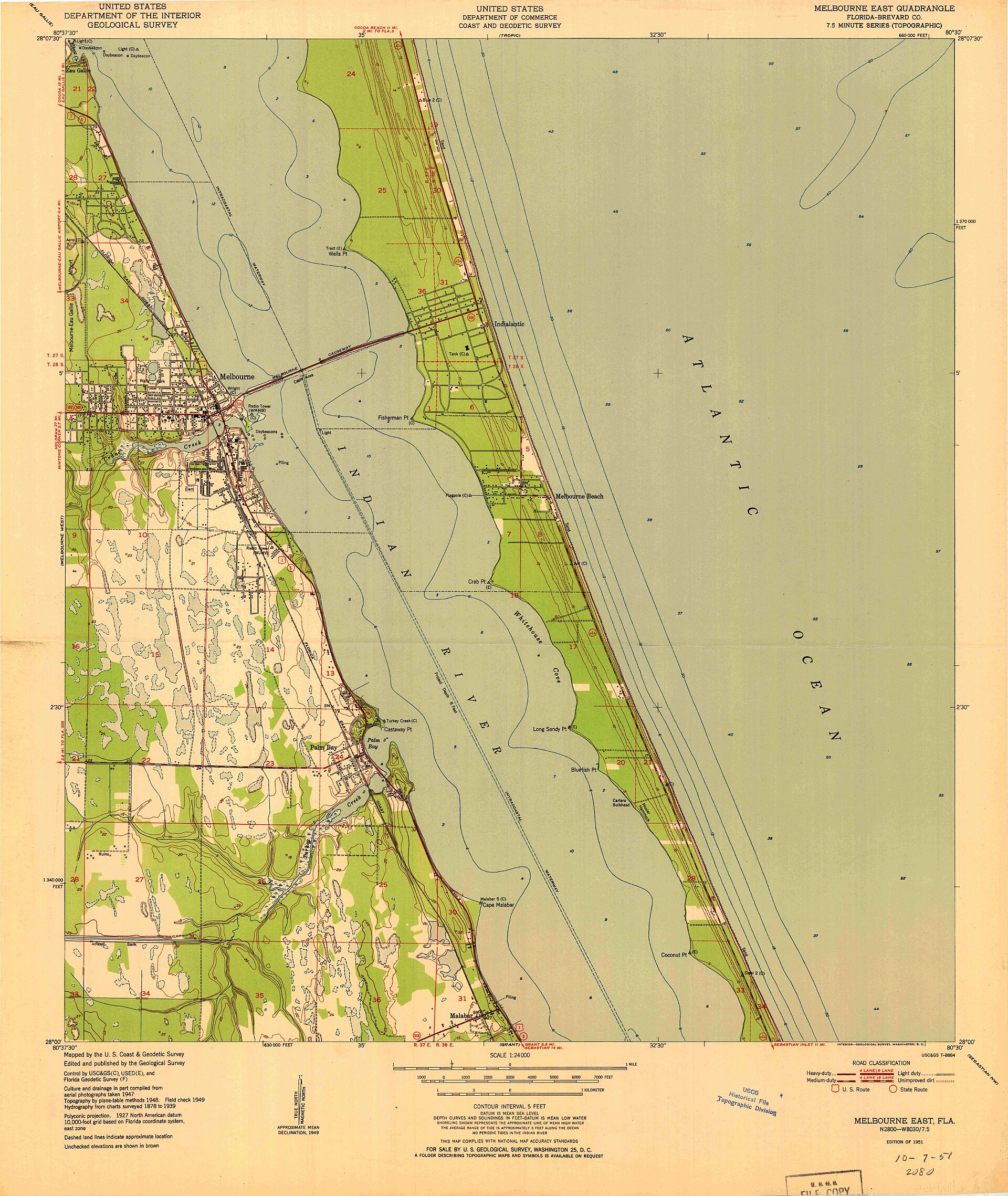
Geographic incoherence. Modern Melbourne stretches from the south end of Crane Creek north past Eau Gallie Boulevard. Its downtown is the old Melbourne downtown on Crane Creek. Its airport is at the far north end. Its biggest employer (L3Harris) is east of the airport. The combined city’s center of gravity is unclear in a way that hurts wayfinding, branding, and visitor experience.
Asymmetric investment. Through the 1970s and 1980s the merged council put proportionally more money into the old Melbourne downtown than into the old Eau Gallie downtown. By the early 1990s the Eau Gallie commercial corridor was visibly declining while downtown Melbourne was being revitalized with grants and TIF dollars. The EGAD effort in the 2010s was partly a response to that.
Council politics. Eau Gallie wards remained slightly underrepresented on the council in terms of policy outcomes through the 1980s, even after the charter-reserved seats expired. The pattern only really broke in the 2000s as newer council members from the old Eau Gallie precincts won at-large seats on growth and infrastructure platforms.
The thing the 246 votes prevented
If the November 1968 Eau Gallie referendum had gone the other way, here’s what likely happens. Eau Gallie stays a separate city through the 1970s. The Apollo-era aerospace money continues to flow but now both cities are competing for the same factory sites and the same contracts. The county tries again to merge them in the mid-1970s, possibly through a state-imposed consolidation. By the time the merger finally happens (probably in the 1980s) the political resentment is much higher because the choice has been taken out of voters’ hands.
Or alternatively: the cities remain separate permanently, like Davenport and Bettendorf in Iowa or Bristol and Bristol on the Tennessee-Virginia border. Both grow but neither becomes the dominant Brevard player. The Florida Tech and Harris arc may still happen but with less local political coherence.
The 246-vote margin is one of those historical hinges where a small number of people changed the shape of everything that followed.
Sources
- Florida Special Acts of 1969, Chapter 69-1351, “An act consolidating the City of Eau Gallie with the City of Melbourne.” Florida State Archives.
- City of Melbourne historical records, council minutes and merger documentation, 1968-1969.
- Brevard County Supervisor of Elections, certified referendum returns, November 5, 1968.
- Florida Memory Project, Brevard County consolidation papers and correspondence, accessed 2026-01-08. https://www.floridamemory.com/
- Eau Gallie Arts District organization, accessed 2026-01-08.
- US Census Bureau, decennial population counts for Melbourne and Eau Gallie, 1950 through 1970.
Further Reading
As an Amazon Associate we earn from qualifying purchases.