The Eau Gallie Arts District (EGAD) and the revival of a place
Forty years after the 1969 merger erased Eau Gallie as a political entity, the arts district called EGAD revived the old commercial core as a cultural neighborhood. Here's how a 2010s campaign rebuilt the identity.
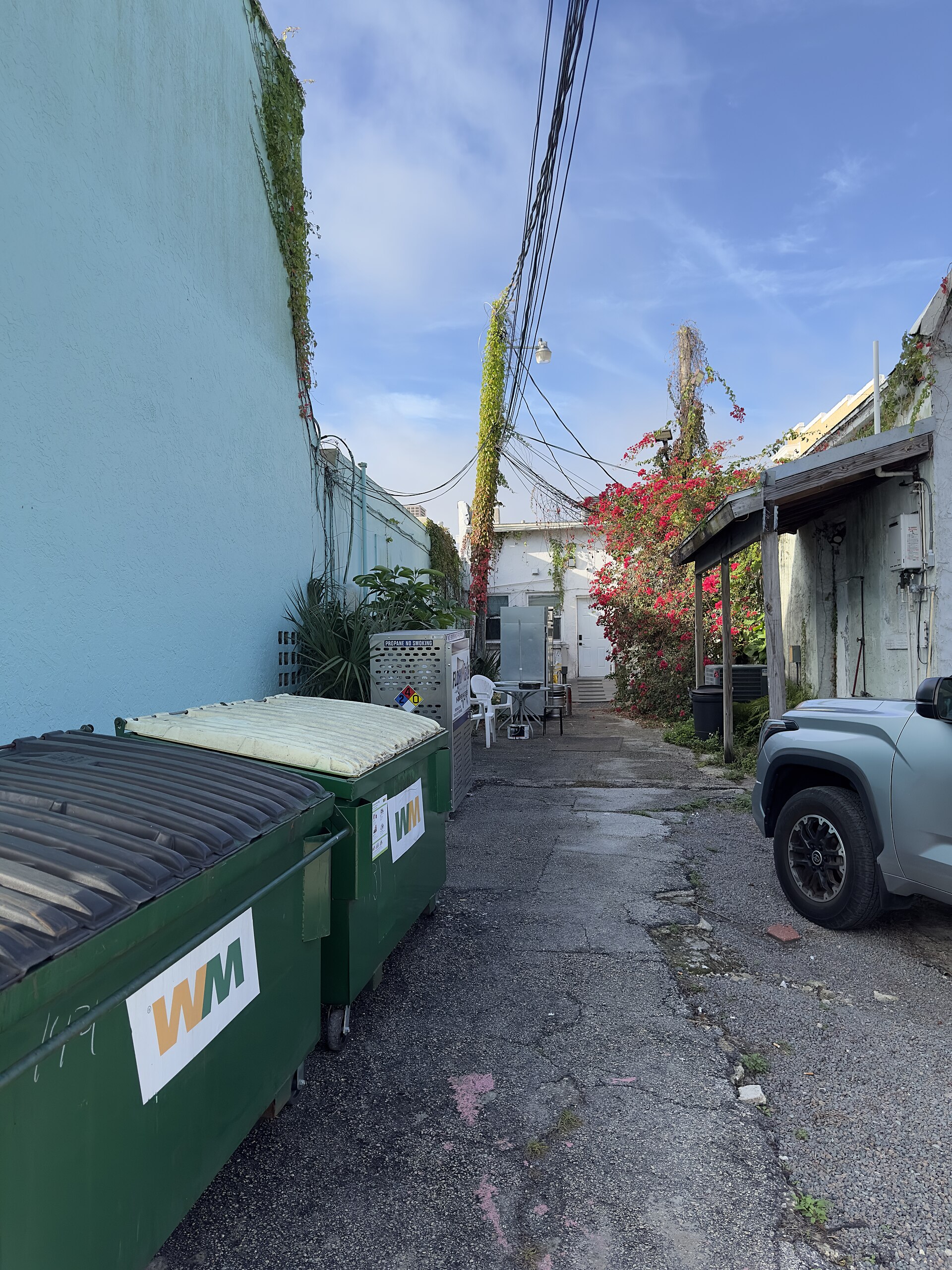
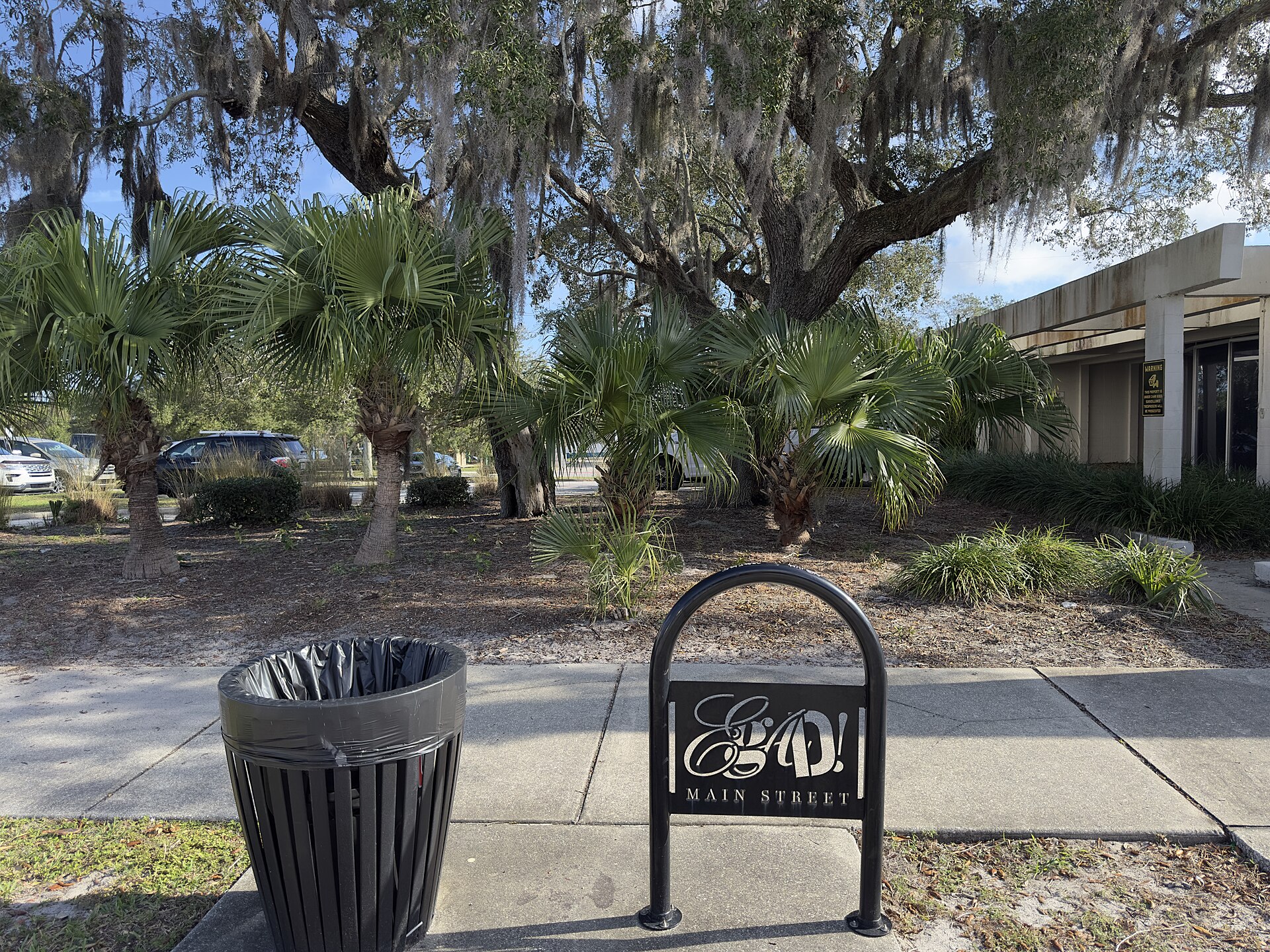
The Eau Gallie Arts District, commonly known as EGAD, is a cultural and commercial neighborhood designation covering the historic Eau Gallie commercial core along Eau Gallie Boulevard and Highland Avenue in Melbourne, Florida. It was formally organized in 2008 to 2010 as a coordinated effort by neighborhood property owners, artists, and the City of Melbourne to revive a commercial district that had been losing tenants and identity for two generations since the 1969 merger. The effort has been substantially successful. EGAD is now one of the most distinctive neighborhoods in Brevard County, with murals, galleries, restaurants, and a recurring monthly art walk that draws several thousand visitors per event.
The story of EGAD is the story of a place that wasn’t supposed to exist anymore, finding a way to be itself again.
What was there before
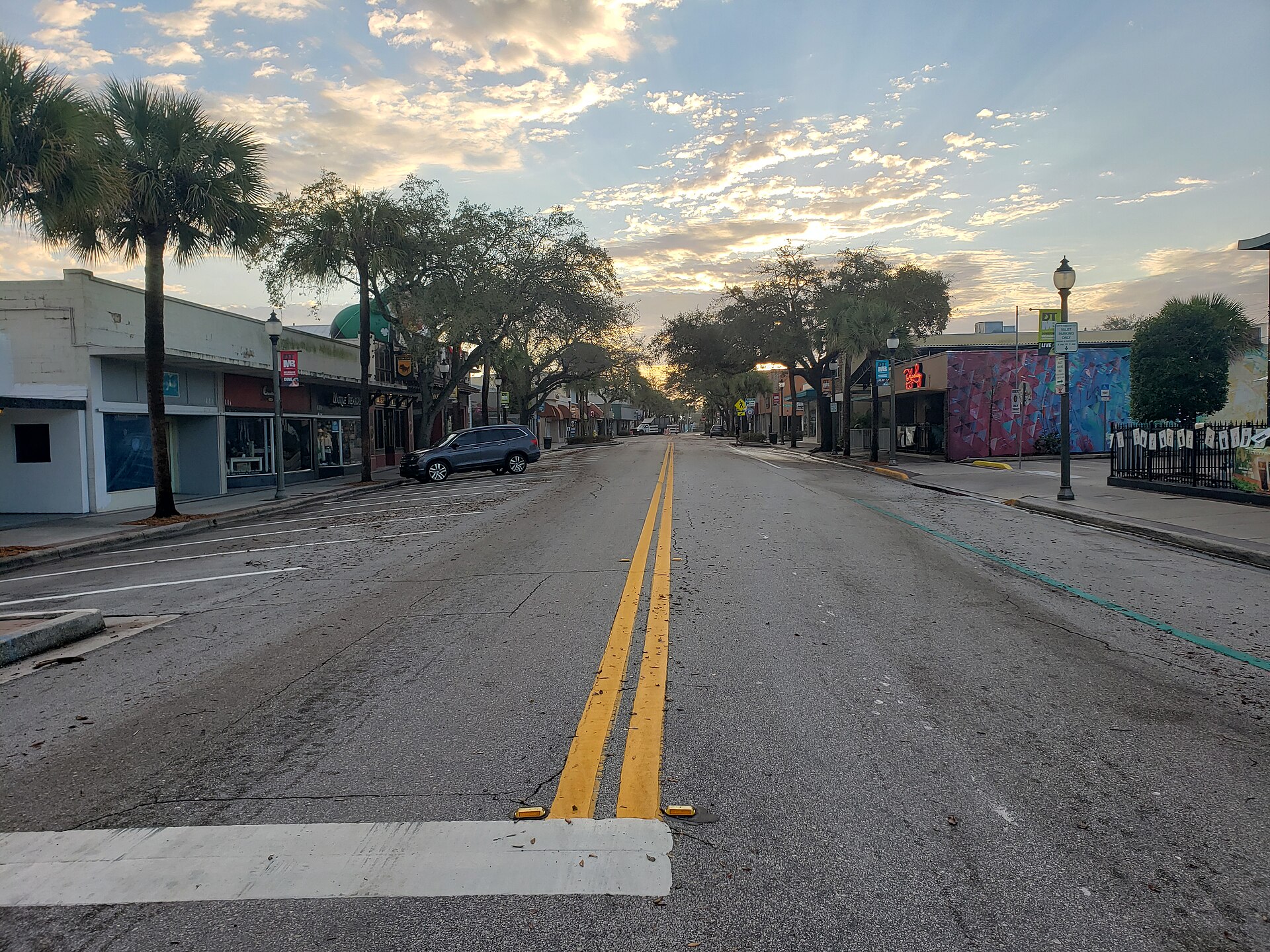
The Eau Gallie commercial core, roughly the four blocks centered on the intersection of Eau Gallie Boulevard and Highland Avenue, was downtown Eau Gallie before the 1969 merger. It had hardware stores, a drugstore, a five-and-dime, a bank, a movie theater, a barber shop, a dry-goods store, a small grocery, a diner, and the offices of the Eau Gallie city government. The buildings were mostly one and two stories, brick or stucco, dating from the 1910s through the 1940s. Many remain.
After the 1969 merger, the district lost its government functions to the consolidated City of Melbourne (whose downtown was three miles south). The retail held on through the 1970s and early 1980s but increasingly bled tenants to the newer commercial developments along US-1 and the Eau Gallie Boulevard corridor west of I-95. By the late 1990s the historic core had high vacancy rates, deteriorating buildings, and a reputation as a place to avoid after dark.
This was the typical small-Florida-downtown trajectory of the second half of the twentieth century. Most analogous downtowns in Brevard followed a similar arc.
What got rebuilt and how
The EGAD revival was a sustained two-decade effort. It can be roughly divided into three phases.
Phase 1: Early property reinvestment, 1995-2005. A small number of property owners began acquiring and rehabilitating historic buildings, often at distressed prices. The Foosaner Art Museum (formerly the Brevard Art Museum), located in the EGAD area at 1463 Highland Avenue, moved into a renovated building in 1995 and anchored cultural credibility for the neighborhood. The museum was affiliated with FIT starting in 2011, which gave it institutional permanence.
Phase 2: Organized district designation, 2008-2012. A coalition of property owners, artists, and city planners coordinated a formal arts-district designation. The City of Melbourne adopted EGAD as a recognized neighborhood designation. Wayfinding signage, banner posts, and a coordinated brand were rolled out. The recurring Art Walk monthly event began in 2010 (third Friday of each month, evening hours), which became the district’s signature draw. By 2012 the Art Walk was drawing 2,000+ visitors per event.
Phase 3: Mural program and density, 2013-present. A large-scale mural program began in the mid-2010s. Working with regional and national mural artists, the district added more than thirty murals to building facades, alleys, and public walls. The murals became a draw in their own right. Visitor surveys in the late 2010s found that “to see the murals” was the most common reason cited for non-resident visitors coming to EGAD.
Restaurants and galleries proliferated through the 2010s. Several breweries and craft beverage businesses arrived. The 32935 ZIP code (which corresponds to the historic Eau Gallie city footprint) became an actual real-estate appreciation zone, partially driven by EGAD’s revival.
What EGAD does well
A few features distinguish EGAD from generic Florida arts-district designations that mostly amount to branding without substance.
Real artists, not just retail. EGAD has working studios and galleries with practicing artists, not just gift shops selling mass-produced work labeled “local art.” The Foosaner Art Museum anchors that authenticity. The monthly Art Walks include open studios where visitors can see actual production.
Walkability. The historic core is dense and compact. You can park once and walk between most attractions. That’s rare in Brevard County, where the dominant retail model is the surface-parking strip mall.
Architectural integrity. Most buildings retain their pre-merger facades, scale, and rhythm. The street feels like a 1930s small-town main street rather than a modern shopping district. The contrast with everything else in suburban Melbourne is striking.
Distinct identity from City of Melbourne downtown. EGAD is not in competition with downtown Melbourne. The two districts have different vibes and different draws (downtown Melbourne is more dining and waterfront; EGAD is more visual arts and casual evening). They reinforce each other rather than cannibalizing.
What EGAD doesn’t fully solve
The revival is partial in three respects.
Residential gentrification pressure. EGAD’s success has made the surrounding residential blocks more expensive. Long-term residents of the historic Eau Gallie neighborhood, many of them lower-middle-class working families, have faced rising property taxes and rents. The district’s success is also a displacement pressure on the people who lived nearby through the decades when the neighborhood wasn’t desirable.
Storefront vacancy in non-core blocks. EGAD’s success is concentrated in the central four blocks. Move two blocks west or north and you’re back in older, less prosperous commercial frontage. The revival hasn’t extended uniformly.
Limited daytime activity outside Art Walk. EGAD on a weekday afternoon is quiet. Many businesses cater to evening and weekend visitors. The district’s economic model depends heavily on event-driven traffic. Sustained daytime business activity is thinner.
The Foosaner anchor and the FIT affiliation
One institutional decision did more to stabilize EGAD than any branding effort. The Foosaner Art Museum, founded in 1978 as the Brevard Art Center and Museum and renamed the Brevard Art Museum, occupied a renovated Highland Avenue building in 1995 and supplied the early cultural credibility for an otherwise depressed commercial block. In 2011 the museum entered an affiliation agreement with the Florida Institute of Technology, becoming the Foosaner Art Museum operated under FIT’s institutional umbrella.
The FIT affiliation matters for reasons that have little to do with the art on the walls. A nonprofit storefront museum can fail in any given fiscal year if a donor exits or a major exhibit underperforms. A museum embedded in an accredited research university’s institutional structure has access to endowment cross-subsidy, university maintenance and insurance, student-volunteer staffing, and the kind of multi-decade planning horizon that private nonprofits rarely manage. The Foosaner’s permanent collection, its annual exhibition calendar, and its physical building maintenance all stabilized after 2011 in a way that the small-nonprofit predecessor could not have sustained. EGAD’s other galleries, restaurants, and mural-program funders rely on the foot-traffic baseline the Foosaner anchors. Without the FIT affiliation, that baseline would be more fragile.
What the revival means civically
EGAD is interesting partly as a counter to the assumption that the 1969 merger erased Eau Gallie permanently. The political consolidation did happen, and Eau Gallie no longer exists as a city. But the underlying community identity, the people who lived in those neighborhoods and worked at those schools and shopped at those storefronts, persisted across two generations. When economic conditions made revival possible (rising property values, growing arts-tourism market, available historic building stock), the community identity reactivated.
A merger erases political organization but doesn’t necessarily erase identity. Forty years later the historic Eau Gallie neighborhood is more visible and more economically significant than it had been at any point since 1968. It’s not the same place it was in 1968. It’s not pretending to be. But it’s a place again.
That outcome wasn’t planned in 1969. It might be the more interesting story of how that consolidation actually worked out.
Sources
- Eau Gallie Arts District organization, accessed 2026-01-18. https://www.egadartsdistrict.com/
- City of Melbourne planning documents on the EGAD designation, accessed 2026-01-18. https://www.melbourneflorida.org/
- Foosaner Art Museum / Florida Tech, institutional history, accessed 2026-01-18.
- Florida Memory Project, Eau Gallie commercial-district photographs 1920-1968, accessed 2026-01-18. https://www.floridamemory.com/
- Brevard County property appraiser records, EGAD-area assessments 1995-2025.
Further Reading
As an Amazon Associate we earn from qualifying purchases.