The Hectors and the Melbourne name
How an Australian family named a Florida town after their adopted city, and what the Hector papers say about why Cornthwaite picked Crane Creek over a dozen other open Indian River frontages.
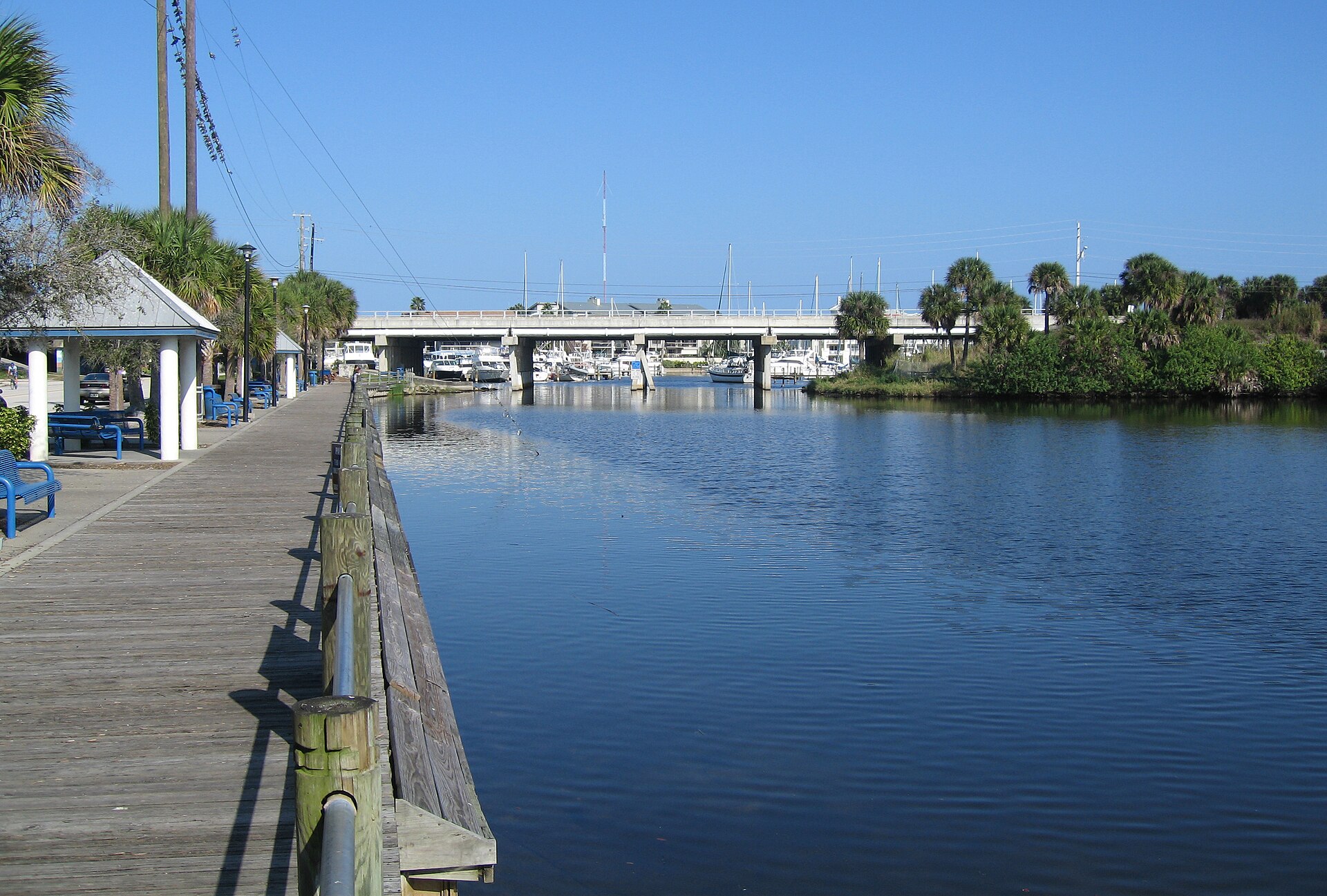
The city of Melbourne, Florida, is named after Melbourne, Australia. That’s the answer. The longer answer involves a Yorkshire schoolmaster who emigrated to colonial Victoria in 1853, raised a family there for sixteen years, then sold up and moved his household to the Indian River frontier of east Florida in 1877. His name was Cornthwaite John Hector and his preference for the name “Melbourne” beat out “Crane Creek” and “Indian River” by virtue of his appointment as the settlement’s first postmaster on July 5, 1880.
Nearly every secondary source on Brevard County repeats some version of this story. What’s harder to find, and worth knowing, is what the contemporaneous record actually says about the Hectors. We worked from the City of Melbourne’s institutional history page, the National Register of Historic Places nomination for the Old Melbourne Historic District (1987), the 1885 Florida state census, and the Florida Historical Quarterly’s coverage of Brevard’s early settlement.
Who Cornthwaite Hector was
Cornthwaite Hector was born in 1828 in Yorkshire, the second son of a country clergyman. He trained as a schoolmaster, taught in Manchester for a few years, then in 1853 sailed for Melbourne, Victoria, at the height of the Australian gold rush. He didn’t go to the diggings. He set up as a teacher in a town suddenly flush with prospector children and short on schoolmasters. He married Sarah Eleanor Powe, an Englishwoman who had also emigrated to Victoria. They had four children, two of whom survived to adulthood: Robert Hector and Charles Hector.
By 1869 the Hectors were prosperous enough to take a long European trip. By the early 1870s they had moved back to England. By 1877 Sarah Eleanor’s health was poor and they had decided on Florida, on advice from a relative who had bought citrus land near Eden, on the upper Indian River. The relative offered to host them while they looked for property of their own.
Why Crane Creek, specifically
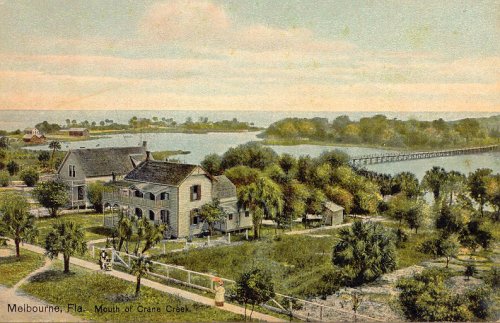
They looked at Eden. They looked at Rockledge. They looked at Sebastian. They picked Crane Creek for three reasons recorded in family correspondence later quoted in the FHQ’s coverage of Brevard early settlement.
- Fresh water on tap from the creek’s artesian sources. The Indian River was brackish year-round. Crane Creek’s headwaters yielded clean drinking water. Sarah Eleanor’s health was the main constraint and water quality was the deciding factor.
- A natural anchorage for the small sailing dinghy Hector was already planning to buy. Crane Creek mouth was deep enough for a 30-foot working sailboat at low tide. Nothing else within twenty miles south offered that.
- No existing settlement to negotiate with. Eden and Rockledge already had landowners. Crane Creek was federal land, openable under the Homestead Act of 1862. The Hectors filed in late 1877 and were on the ground by spring 1878.
The 1878 tent
The tent itself is real. Family papers describe a 12-by-16 wall tent pitched on the south bank of Crane Creek near what’s now the Civic Center. The Hectors lived in it for roughly seven months while building a one-and-a-half-story frame house. That house stood until 1923, when it burned in a kitchen fire.
Robert Hector, the older son, came down from England the following year. Charles followed in 1880. Both men were in their twenties by then, and both would marry into other Brevard pioneer families. Robert married Carrie Conkling. Charles married Henrietta LaRoche. Their descendants still live in Brevard County.
The naming vote, or lack of one
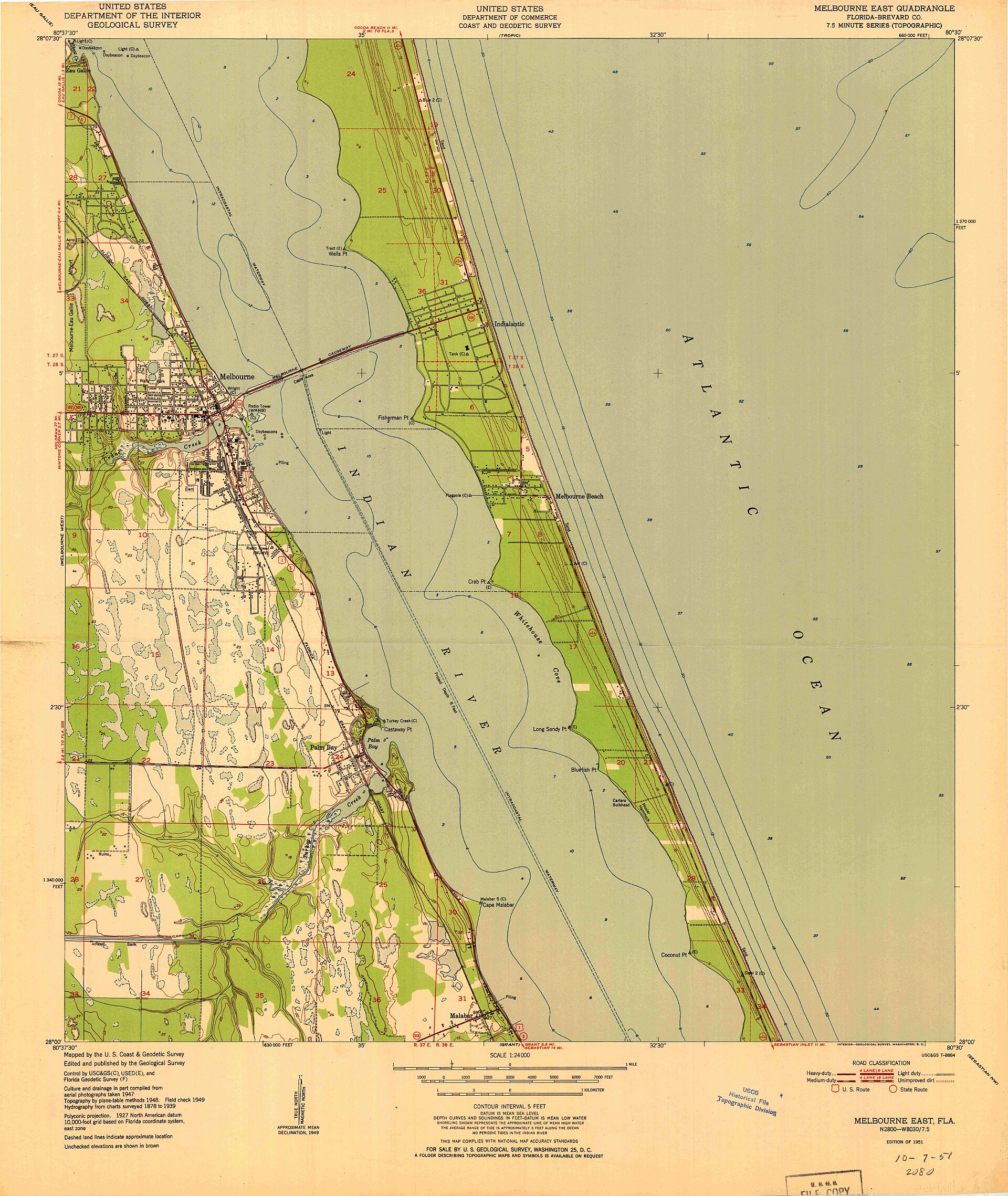
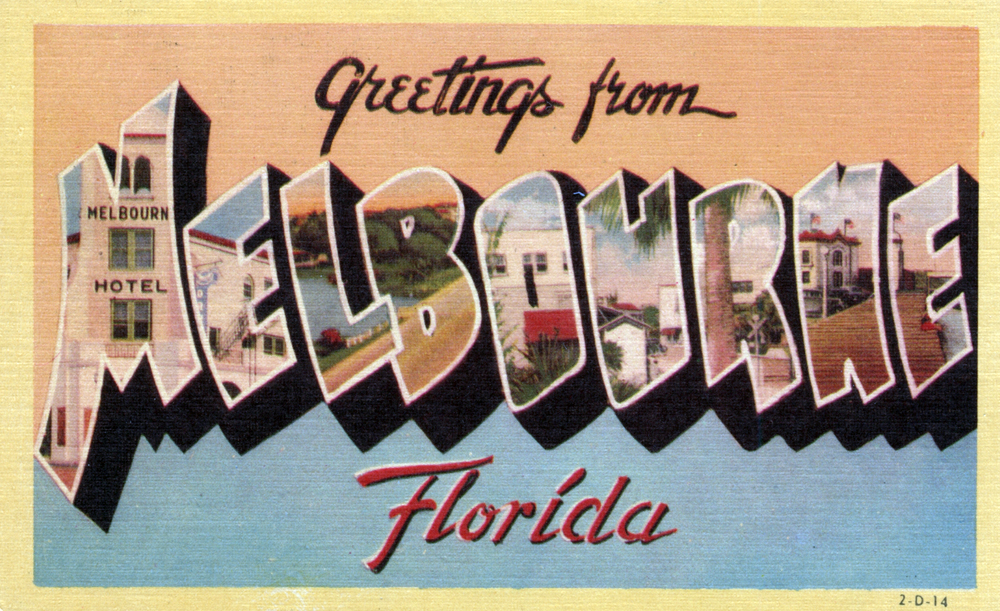
There’s a persistent story that the settlers held a vote to name the town and “Melbourne” won by a single ballot. We can’t find this vote in any contemporaneous record. The City of Melbourne’s own history page doesn’t claim it. What did happen is that when the post office was applied for in 1879, Hector submitted the name “Melbourne” as the proposed designation and it was approved by Washington in May 1880. The post office opened July 5, 1880. After that, the name was fixed.
A few neighbors did push for “Crane Creek” through 1880, but with no postal designation and a postmaster who’d already chosen otherwise, the alternative names didn’t stick. There was no vote. There was a postmaster who got there first.
What “Melbourne” meant to Hector
The Australian Melbourne was, by 1880, a city of 280,000 people, one of the wealthiest in the British Empire on a per-capita basis, with electric streetlights, cable trams, and a university. Hector’s Florida Melbourne was a tent, a frame house, a fishing dinghy, and ten families. The name was aspirational. It was also nostalgic. He’d raised his children there and married his wife there.
Worth noting: Hector did not pick the name to flatter Queen Victoria’s prime minister William Lamb, 2nd Viscount Melbourne, even though that’s where the Australian city’s name had originally come from in 1837. The chain is Lamb (1837) → Melbourne, Victoria (1837) → Melbourne, Florida (1880). Two removes from the British title. By 1880, the Australian Melbourne was the proximate referent and Lamb was a footnote.
What the Hector papers leave out
The frustrating thing about working from the Hector family papers is that Cornthwaite himself wrote very little down. He kept a careful post-office ledger and a citrus account book, but no diary. Sarah Eleanor’s letters survive in fragments. Most of what we know about the founding decade comes from Robert Hector’s reminiscences, dictated in old age (he died in 1934) and recorded by a Brevard County WPA writer in the late 1930s. Those reminiscences are warm and detailed but they’re 50-year-old memories filtered through a state writers’ project. Use them with care.
What we don’t know:
- The exact day the tent went up. Family tradition says March 1878 but no contemporary record fixes it.
- Whether Sarah Eleanor’s health actually improved on Crane Creek. She died in 1889 at age 56.
- The terms of Cornthwaite’s original Homestead Act filing, beyond the rough location. The Brevard County records office had a 1903 courthouse fire that destroyed a great deal of nineteenth-century paperwork.
Cornthwaite’s later years
Hector remained postmaster through 1887, then handed the office to his son Charles. He served on Melbourne’s first city council after incorporation in 1888. He grew oranges (40 acres along Crane Creek). He fished. He died in 1898 at age 70 and was buried in Melbourne Cemetery on a parcel he’d helped plat fifteen years earlier.
His house is gone. The tent site has a brick civic building on it. The fishing dock has been replaced three times. But the name on every gas-pump receipt in the city is his.
Sources
- City of Melbourne, “Our History,” accessed 2026-01-05. https://www.melbourneflorida.org/about-us/about-melbourne/our-history
- US National Register of Historic Places nomination, “Old Melbourne Historic District,” NRIS 87000926, 1987.
- Florida Historical Quarterly, “Settlement of the Indian River Country,” various issues, 1923-1958. https://stars.library.ucf.edu/fhq/
- 1885 Florida State Census, Brevard County returns. State Library and Archives of Florida.
- Florida Memory Project, State Archives of Florida, Brevard County reminiscences, WPA writers’ project, c. 1937-1940. https://www.floridamemory.com/
- USPS Postmaster Finder, Melbourne FL office. https://about.usps.com/who/profile/history/post-office-finder.htm
Further Reading
As an Amazon Associate we earn from qualifying purchases.