Melbourne's airport, 1928 to today: small grass strip to international hub
Naval Air Station Melbourne trained Navy pilots through WWII at what's now the Orlando Melbourne International Airport. The transition from grass strip to commercial gateway is one of Brevard's quiet success stories.
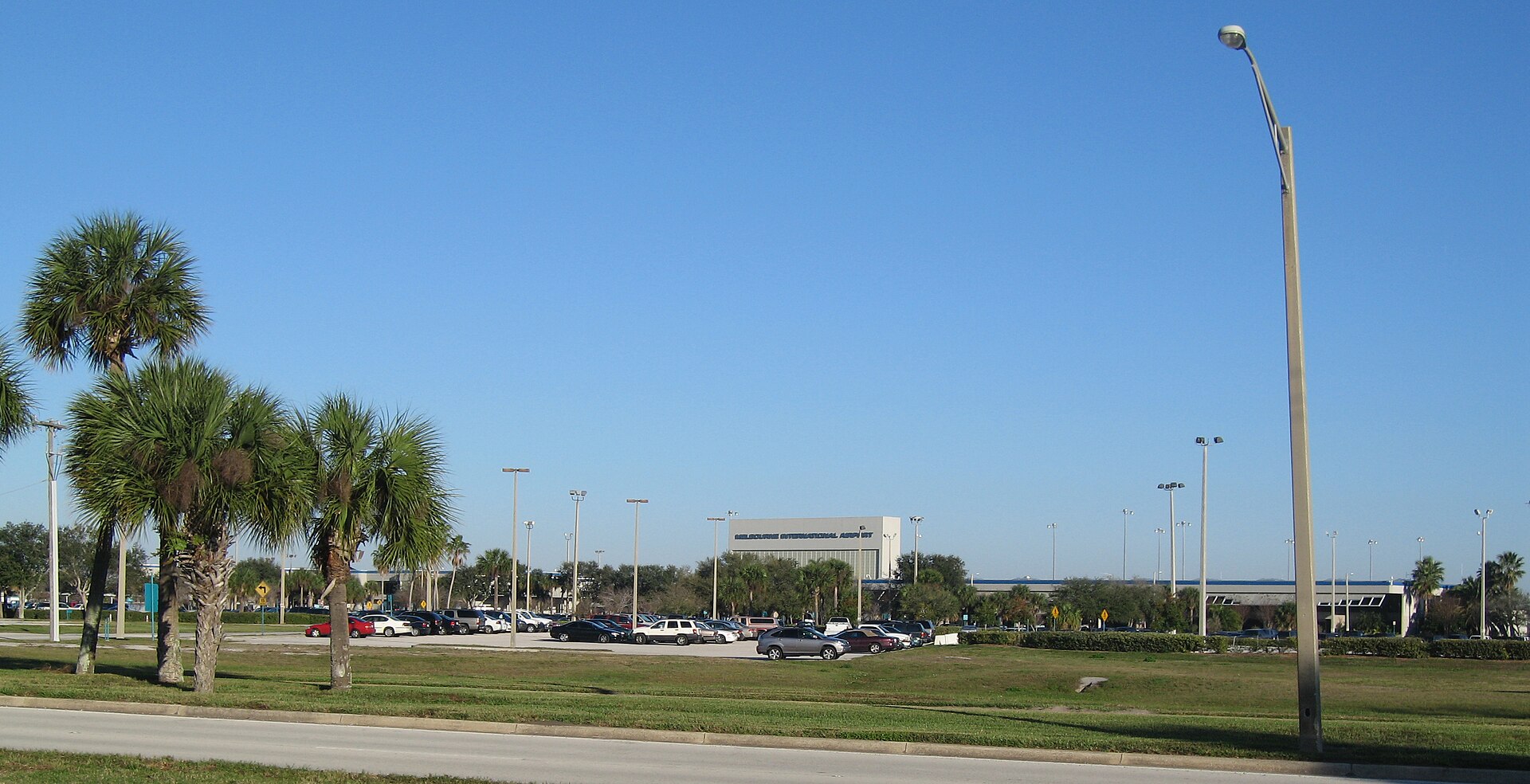
The Orlando Melbourne International Airport (IATA: MLB) is a commercial passenger and cargo airport about three miles northwest of downtown Melbourne. It’s the smaller of Brevard County’s two civilian airports (the other is the much smaller Space Coast Regional in Titusville). MLB began as a grass airstrip in 1928, became Naval Air Station Melbourne in 1942 for primary flight training during WWII, returned to civilian use in 1947, and has been a commercial airport in some form ever since. The current passenger terminal opened in 1994, with major expansions in the 2010s. Annual passenger volume runs about 800,000 to 1 million depending on the year.
The 1928 grass strip
Melbourne’s first airport was a grass airstrip on the western edge of town, established in 1928 by a small group of local aviation enthusiasts. The strip served barnstormers, mail flights, and a handful of resident private pilots. By the late 1930s it had a single hangar, a fuel pump, and roughly 600 feet of mowed runway.
This was an unremarkable small-town Florida airport. Most Florida coastal towns of similar size had something like it by the 1930s. Melbourne’s was slightly more developed than the average because the county had been promoting itself as a winter destination since the 1910s and the leisure aviation market had a foothold here.
NAS Melbourne, 1942-1946
In May 1942, the US Navy acquired the airfield and roughly 1,800 surrounding acres for development as a primary pilot training base. Construction of three paved runways, hangars, barracks, and support facilities ran from mid-1942 through late 1943. The base, officially commissioned as Naval Air Station Melbourne in October 1942, trained primary and intermediate pilots in single-engine aircraft, primarily Stearman PT-17 biplanes and later SNJ Texans.
At peak in 1944 the base had about 1,000 personnel, including roughly 400 student pilots in rotation at any given time. Training output for the war was approximately 2,500 newly qualified Navy pilots, who then moved on to operational training at other bases before fleet assignments.
The base’s economic impact on Melbourne was substantial. Civilian employment ran to several hundred. Pilots’ wives lived in town rental housing. Local restaurants and shops served the base. The Melbourne economy of 1944 was meaningfully shaped by the base’s operations.
NAS Melbourne also had a darker chapter: the base was one of several Navy aviation training facilities where racial segregation of Black personnel was strictly enforced through 1945. Black sailors at NAS Melbourne worked in service roles (mess, supply, base support) under separated arrangements. The base did not train Black pilots; that program existed at other facilities. Postwar integration of the Navy didn’t begin until 1948.
Postwar conversion
The Navy decommissioned NAS Melbourne in 1946. The base returned to municipal control as Melbourne Airport (the “international” designation came later). Most of the wartime infrastructure was retained: the three paved runways, the hangars, the support facilities. The Navy left in good shape, partly because the rapid postwar demobilization meant facilities were closed before they fell into disrepair.
Through the 1950s and 1960s the airport served general aviation, cargo, and occasional charter operations. Scheduled passenger service was intermittent. The Cape’s missile program created demand for cargo and contractor charter flights, which the airport accommodated. The runway lengths (longest about 6,000 feet) supported propeller-driven cargo aircraft adequately but were insufficient for early jet airliners.
The first major postwar expansion was the extension of the longest runway to 8,300 feet in the late 1960s, enabling jet service. Eastern Airlines and National Airlines both ran limited Boeing 727 service through the 1970s.
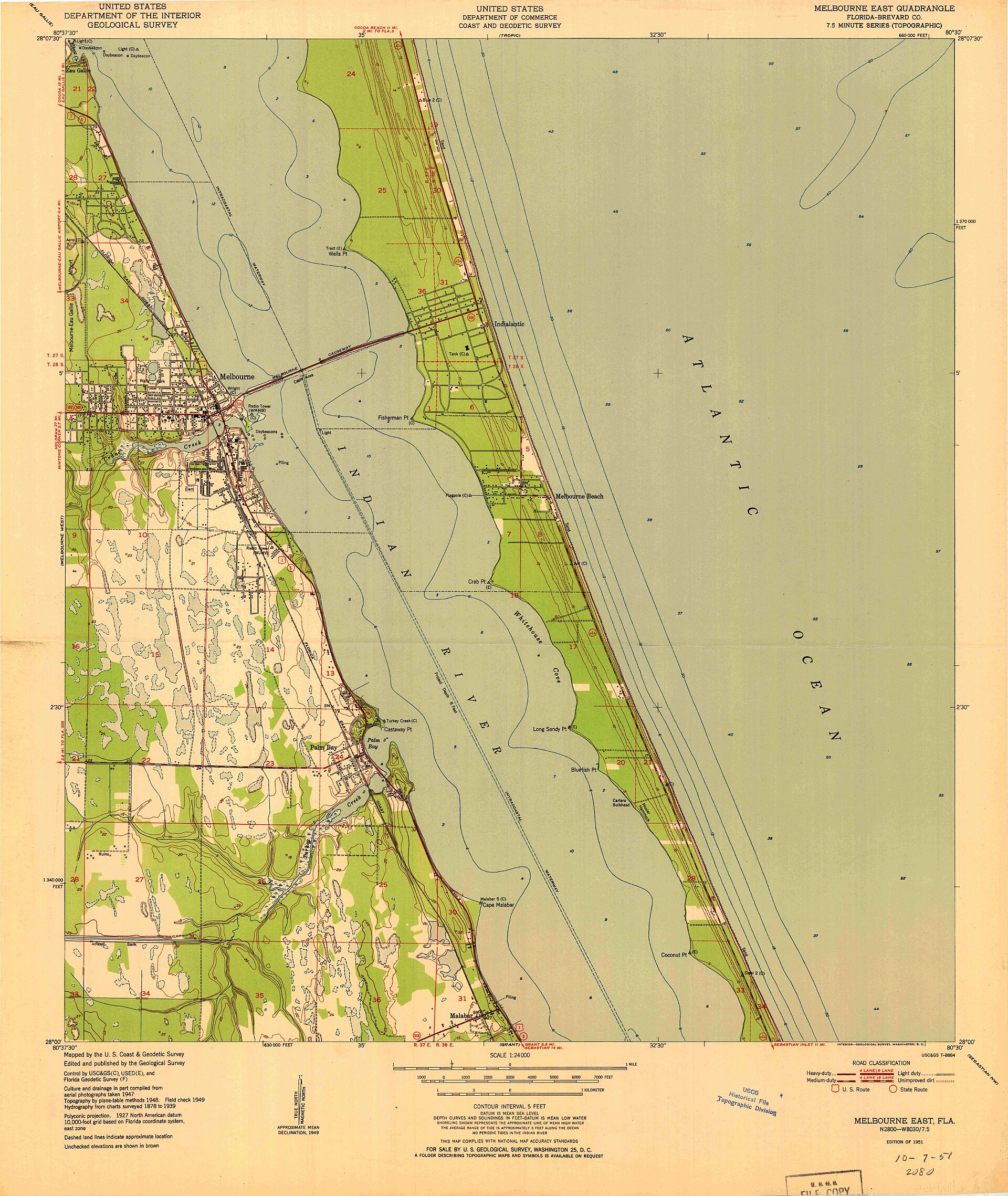

The 1994 terminal and the 2010s rebranding
A new passenger terminal opened in 1994. Modern jet bridges, expanded gate count, modern security, and parking infrastructure. The 1994 terminal carried the airport through the next two decades.
Major expansions in the late 2010s and early 2020s added gates, retail, customs processing for international flights, and significantly expanded parking. Total passenger volume grew from about 400,000 annual in the early 2010s to 800,000+ by the late 2010s. The airport rebranded as Orlando Melbourne International Airport in 2015, capitalizing on proximity to the Orlando tourist market (Disney/Orlando is about 65 miles west) while retaining the Melbourne home identity.
The “Orlando” naming has been mildly controversial. It accurately reflects the airport’s tourist market positioning but it understates Melbourne’s role in the airport’s economy. Most passenger volume is destination-Melbourne (visitors to Brevard County beaches, Cape Canaveral cruise embarkations, NASA contractor business travel) or origin-Melbourne (Brevard residents flying out). The Orlando label is marketing more than substance.
Current operations
As of 2026 the airport has scheduled passenger service from a small number of carriers (Allegiant, occasional seasonal service from other low-cost carriers). The bulk of operations are general aviation, cargo (FedEx and UPS), military and contractor charter, and FIT’s College of Aeronautics training fleet.
The College of Aeronautics is a significant part of the airport’s daily activity. FIT runs flight training operations from a dedicated facility at the airport, with a fleet of about thirty training aircraft. Student pilots rack up substantial flight hours over the airport and its outlying area daily.
Embraer Aircraft has a major presence at the airport. The Brazilian manufacturer operates a final-assembly facility for the Phenom 100 and Phenom 300 business jets on the airport campus, with employment in the hundreds. The Embraer facility opened in 2008 and has expanded multiple times. It’s the most significant employer at the airport beyond airport operations itself.
What the airport doesn’t fully resolve
Melbourne is a moderately distant alternative to Orlando International (MCO), which is by far the dominant regional gateway. MCO sees more than 50 million passengers per year. MLB’s million is small in comparison. Most Brevard residents who fly do so out of MCO, not MLB, because of fare differences and frequency advantages.
MLB’s reasonable market positioning is as a leisure-destination alternative for travelers willing to drive 25 minutes to reach Cape Canaveral cruise terminals (closer than from MCO), or as a convenience option for Brevard residents on a small number of city pairs. That’s a moderate but real niche.
The airport has also pursued international cargo aggressively in the 2010s. Several charter freighter operations use MLB for transatlantic cargo runs, taking advantage of available slots and lower handling costs compared to Miami and Orlando.
Why the airport matters to Melbourne
Three reasons.
First, employment. Direct airport employment plus the Embraer manufacturing facility plus FIT’s College of Aeronautics aggregates to several thousand jobs. That’s a meaningful slice of south Brevard’s economy.
Second, business-traveler infrastructure. Harris/L3Harris and several other defense contractors depend on having a working commercial airport within fifteen minutes of their facilities. Without MLB, business travel would route through MCO with substantially longer ground time and worse scheduling flexibility.
Third, the cruise industry connection. Port Canaveral’s cruise traffic has been a growing piece of Brevard County’s economy. MLB serves a measurable share of cruise embarkations as the convenient regional alternative to MCO, particularly for travelers driving up from points south or flying in from points north.
The airport isn’t glamorous. It doesn’t draw the visitor attention that the Cape, FIT, or the beaches do. But it does work, and Melbourne is more functional because it’s there.
Sources
- Naval History and Heritage Command, “Naval Air Station Melbourne,” accessed 2026-01-19. https://www.history.navy.mil/
- Melbourne Airport Authority, operational data and historical timeline, accessed 2026-01-19. https://www.mlbair.com/
- Florida Memory Project, NAS Melbourne photographs and WWII collection, accessed 2026-01-19. https://www.floridamemory.com/
- FAA, airport master records and passenger statistics for MLB, accessed 2026-01-19.
- Embraer S.A. corporate disclosures on Melbourne operations, accessed 2026-01-19.
Further Reading
As an Amazon Associate we earn from qualifying purchases.