Melbourne's railroad arrival, 1893
Henry Flagler's Florida East Coast Railway reached Melbourne in 1893 and changed the place from a four-day sailing trip out of Jacksonville into an overnight ride. Here's what arrived with the tracks.
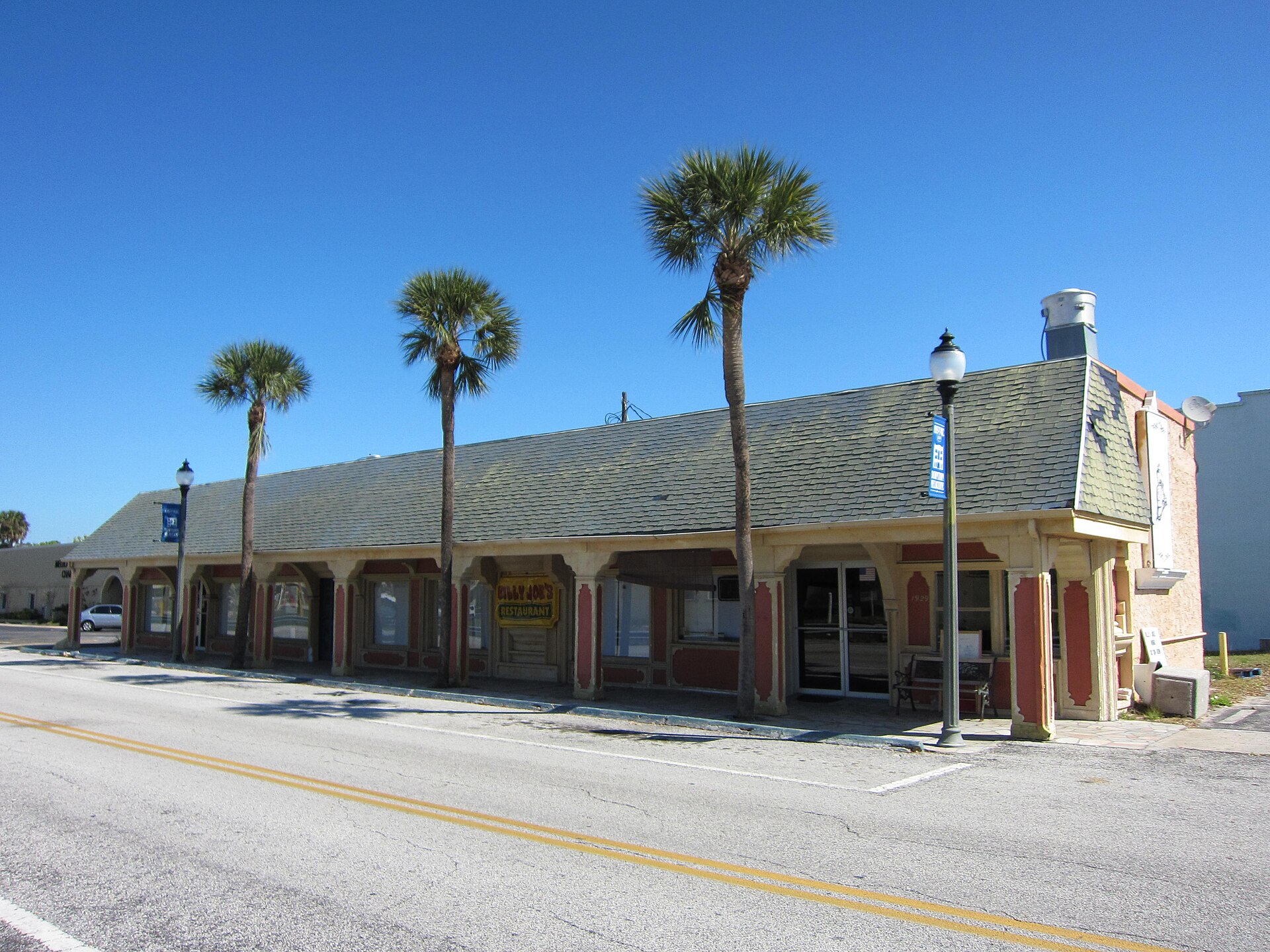
The first scheduled Florida East Coast Railway train reached Melbourne on July 4, 1893, on a single-track right of way that Henry Morrison Flagler had bought, leased, and built progressively south from St. Augustine since 1885. The opening was small. A single locomotive, three cars, a handful of passengers. By the end of 1893 there were three trains daily in each direction. Within five years the same line carried winter tourists from New York to Palm Beach, citrus growers’ fruit to northern markets, and the entire commercial logistics of the Indian River basin.
The railroad changed Melbourne more than any other single event between Hector’s tent and the 1969 Eau Gallie merger.
The shape of the line
Flagler’s Florida East Coast Railway was a private project funded substantially out of his Standard Oil fortune. Flagler had bought a small St. Augustine-area railroad in 1885 and rebuilt it as a standard-gauge through line. By 1890 he was pushing south to Daytona. By 1892 to Titusville. By 1893 to Rockledge, Cocoa, Eau Gallie, Melbourne. By 1894 to Fort Pierce. By 1896 to Miami.
Melbourne’s depot was located on Strawbridge Avenue, two blocks west of Crane Creek. It was a frame building in the standard FEC depot pattern: ticket office, waiting room, baggage room, freight platform, separate waiting rooms for white and Black passengers (the line was segregated through 1956, when interstate transit segregation became unenforceable after the Supreme Court’s Browder v. Gayle ruling). The original 1893 depot building was replaced in 1924 with a brick structure that survives today as a county-owned historic property.
What the train did to Melbourne
Five things changed within a few years of the 1893 opening.
1. The travel-time collapse. Before the railroad, getting from Melbourne to Jacksonville took four days by sailing vessel and overland mule. After the railroad, twelve hours. The Brevard County tax base, the Brevard County voting roll, and the Brevard County marriage market all extended overnight to include Florida east of the FEC line as a connected unit.
2. The citrus shipping revolution. Before the railroad, Brevard’s citrus shipped by water through Jacksonville, then by rail to northern wholesalers. Total transit time: ten to fourteen days. Spoilage risk was substantial. After the railroad, the same fruit moved Brevard-to-Jacksonville-to-New York in five days. The Melbourne Citrus Growers Association built its 1898 packing house specifically to handle FEC carload shipping. Brevard citrus production roughly doubled between 1895 and 1905.
3. The winter tourist economy. Flagler’s strategy from the start was to combine a railroad with a chain of luxury hotels. The Royal Poinciana in Palm Beach (1894), the Breakers (1896), and a network of smaller hotels along the line catered to wealthy northerners wintering in Florida. Melbourne wasn’t a destination on the Flagler hotel circuit, but it was a stop on the line, and the winter colony of small private homes along the Indian River grew substantially between 1895 and 1915. Some of those homes are still standing.
4. The end of the working sailboat economy. Before the railroad, every commercial transaction in Brevard County involved a sailing vessel at some point. Within a decade of the FEC arrival the sailing freight business was gone. The remaining boats worked fishing, citrus shuttle, and pleasure. The Marsh boatyard on Crane Creek adapted to the new economy by switching from commercial-freight boats to fishing skiffs and pleasure launches. Other boatyards didn’t adapt and closed.
5. The migration influx. The 1900 census showed Melbourne with 154 residents. The 1910 census showed 481. The 1920 census showed 1,729. Most of the growth was migrants from the upper South and the Midwest, attracted by the citrus economy and the railroad access. The character of the town shifted from a frontier outpost to a small Florida city in the span of two census cycles.
Passenger service: rise and fall
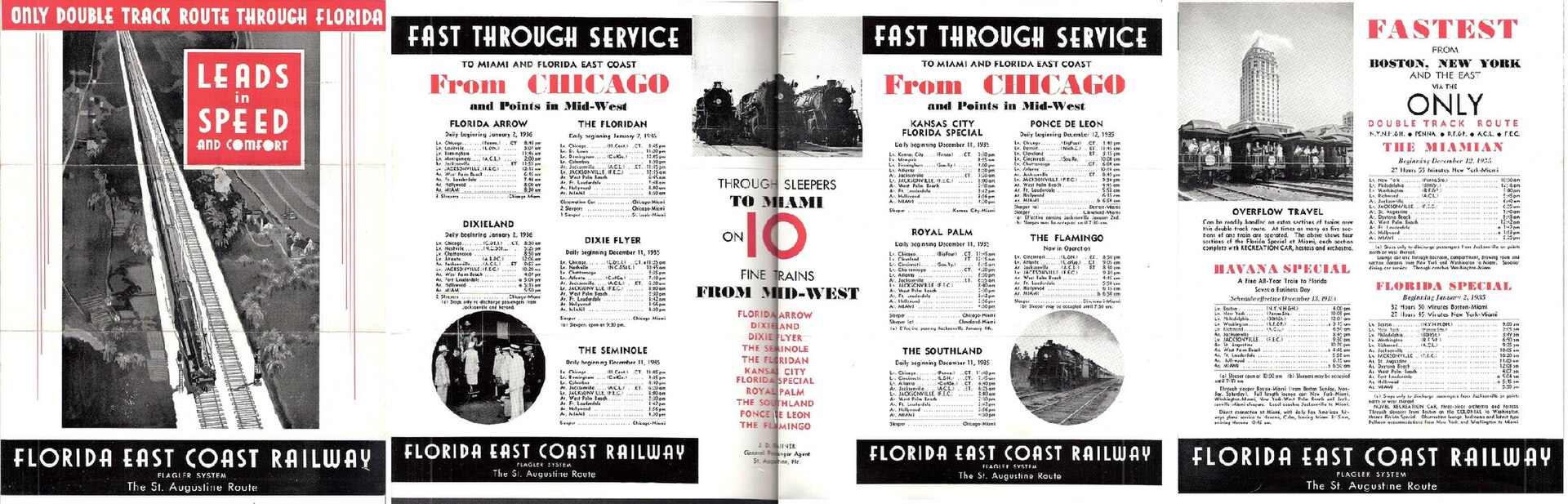
Through the 1920s the FEC carried significant passenger volumes. The premium overnight service from New York to Miami ran through Melbourne with multiple trains daily. Pullman sleeper cars, dining cars, observation cars. A few trains made Melbourne a flag stop only; others scheduled a five-minute station stop.
The Great Depression hit FEC hard. The 1926 South Florida real estate bust had already weakened the line’s finances. By 1931 the railway was in receivership. Service continued but at reduced volumes. The Overseas Extension to Key West, opened 1912 and the most ambitious part of Flagler’s project, was destroyed in the 1935 Labor Day Hurricane and never rebuilt.
WWII saw a passenger-volume spike (gas rationing pushed travelers onto trains). Postwar, the automobile and US-1 (paved through Brevard by 1930) and later I-95 (Brevard sections opened 1965-1970) ate the passenger business.
The FEC ended scheduled passenger service in 1968. From 1968 through 2018 the FEC main line carried freight only. In 2018 Brightline (now Brightline Trains Florida) launched the first scheduled passenger service on the FEC corridor in fifty years, running between Miami and West Palm Beach. Brightline’s Cocoa Beach and Melbourne stations are projected for the late 2020s under the Orlando extension; a Melbourne station opening would be the first scheduled passenger train at Melbourne in over fifty-five years.
The depot today
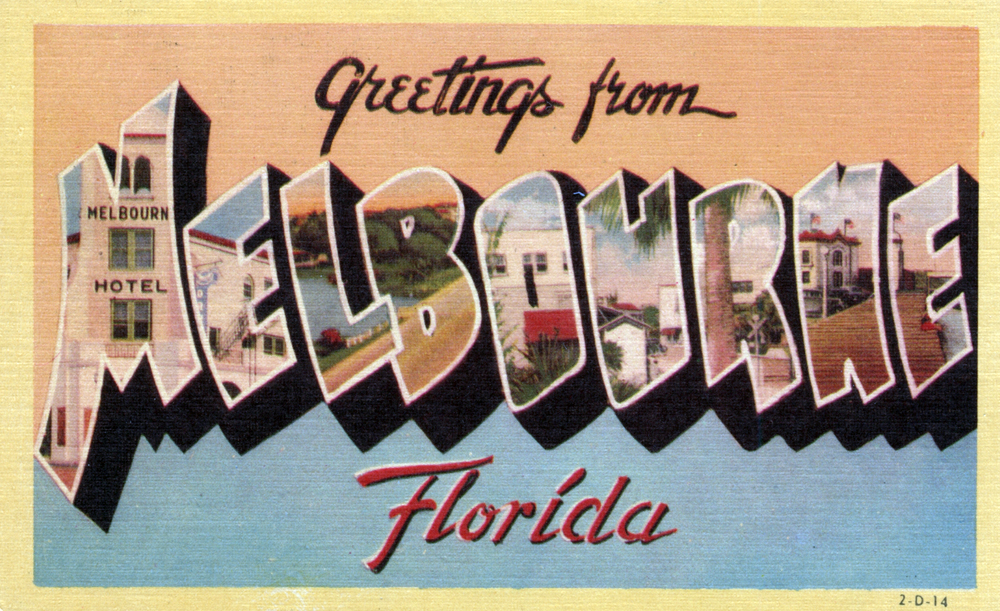
The 1924 brick depot at Strawbridge Avenue is still standing. Brevard County owns it. It’s been used variously as a railroad museum, county offices, and event space. As of 2026 it operates intermittently as a community space, not a working transit hub.
The 1893 frame original is gone. So is the original platform. The tracks themselves are still active, carrying daily FEC freight (largely intermodal containers from the Port of Miami plus aggregate and cement) plus occasional Brightline test runs.
What the railroad didn’t do
The FEC did not industrialize Melbourne. Through the 1950s the city remained primarily a citrus, fishing, and tourist town. The big industrial wave came later, in the 1950s and 1960s, with NASA and the Cape, and that was a truck-and-air-based economy more than a rail one. The FEC’s role in modern Melbourne is freight transit, not workforce or industrial logistics.
The railroad also didn’t change Melbourne’s relationship with Black residents in the ways some hoped. The depot was segregated through 1956. Black neighborhoods west of the tracks (the Booker T. Washington area dating to the 1890s) were physically and economically separated from the white-served downtown by the same railroad that connected the white town to the rest of the country.
The 1893 opening, in summary, is the second most consequential event in Melbourne’s history after the founding. Without the railroad, Melbourne in 1958 is probably a smaller fishing village. With the railroad, it’s a city that can support an FIT, a Harris Corp., and an L3Harris.
Sources
- Florida East Coast Railway, corporate history page, accessed 2026-01-11. https://www.fecrwy.com/about/
- Florida Memory Project, FEC railroad photographs and documents, accessed 2026-01-11. https://www.floridamemory.com/
- Smithsonian Institution, “Henry M. Flagler” exhibit and papers, accessed 2026-01-11.
- US Census Bureau, decennial counts for Melbourne FL, 1900 through 1930.
- Brightline Trains Florida, Orlando extension status updates, accessed 2026-01-11.
- Brevard County records, 1924 Melbourne depot historic designation.
Further Reading
As an Amazon Associate we earn from qualifying purchases.