William H. Gleason and the Reconstruction-era land deals that shaped Brevard
Florida's impeached lieutenant governor used federal land-agent appointments to assemble 50,000+ acres along the Indian River. Here's how the Gleason holdings shaped Brevard County for a century.
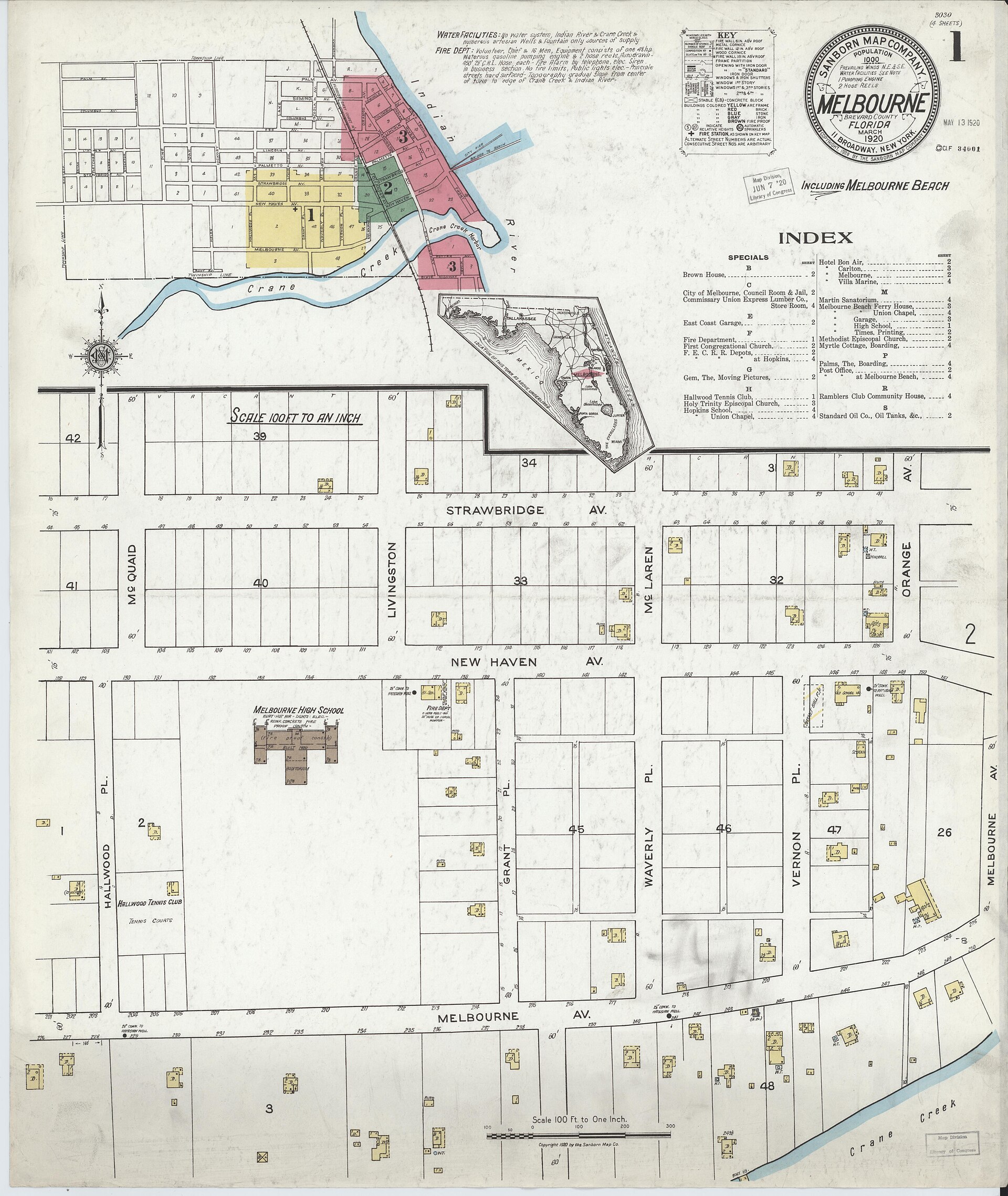
William Henry Gleason was a Massachusetts-born Wisconsin Republican who arrived in Florida in 1865 as a federal land agent, used the appointment plus a series of subsequent state offices to assemble more than 50,000 acres of Indian River frontage and interior pine flatwoods, founded Eau Gallie as a town in 1860 on a pre-acquired parcel, became lieutenant governor of Florida in 1868, was impeached the same year over residency disputes, retained his land holdings through the impeachment and beyond, lived for the rest of his life as a wealthy if controversial Florida landowner, and died in Miami in 1902. The Gleason holdings, sold and resold through the late nineteenth and early twentieth centuries, underlie much of modern Brevard’s developed land.
This article walks the deal history.
How Gleason got to Florida
Born 1829 in Tewksbury, Massachusetts. Raised in upstate New York. Worked as a railroad surveyor in Wisconsin in the 1850s and built Republican Party connections. The Lincoln administration appointed him to Florida in 1865 as a federal land agent, charged with administering homestead patents on federal land in the state and adjudicating contested claims.
The position was potentially corrupt by design. Federal land agents had wide discretion over which parcels were available, which claims were valid, and which speculative purchases through the various land scrip and warrant programs would be honored. Gleason came to Florida already familiar with how such positions could be used to assemble private holdings. He was good at it.
The Eau Gallie tract
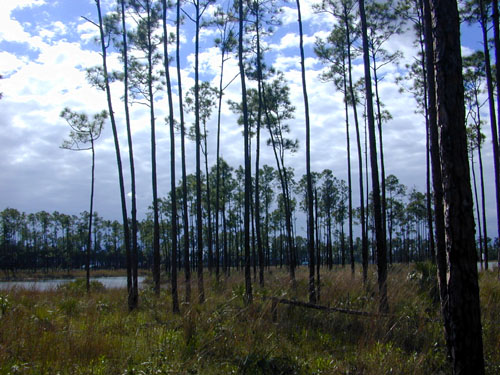
By the time Gleason filed the Eau Gallie town plat in 1860 (yes, before the war, on land he had acquired through earlier federal channels), he was sitting on what would become the headquarters parcel of a large Indian River land empire. The Eau Gallie tract was high-ground pine flatwoods on the west bank of the Indian River, an exceptionally well-positioned piece of land in a region where most coastal frontage was low and wet.
After the war Gleason resumed assembly. Between 1865 and 1872 he acquired land through:
- Federal land scrip and warrants. Civil War veterans had received bounty-land warrants redeemable for federal land. Many veterans sold their warrants on the open market at discount. Gleason bought warrants and redeemed them for Florida tracts.
- Tax-sale auctions. Confederate property abandoned or foreclosed during the war was auctioned by the federal Direct Tax Commission. Gleason bought at these auctions.
- Homestead Act filings in family names. The 1862 Homestead Act allowed a settler to file on 160 acres and receive title after five years of residence and improvement. Gleason had relatives and associates file homestead claims that effectively went to his control.
- Florida Internal Improvement Fund acquisitions. The state had vast holdings of “internal improvement” land it sold to railroads and large buyers. Gleason was well-positioned through his state government connections to acquire IIF tracts on favorable terms.
By the early 1870s the combined Gleason holdings exceeded 50,000 acres across Brevard, Dade, and adjacent counties.
The lieutenant governorship and impeachment
Florida’s 1868 constitution created a Republican-aligned state government. Harrison Reed became governor. Gleason became lieutenant governor on January 9, 1868. By June 1868 the Florida House had passed articles of impeachment against him on grounds that he had not satisfied the residency requirement (the state constitution required a candidate to have resided in Florida for three years before election; Gleason’s federal-agent service was disputed as not counting). The Florida Supreme Court upheld the impeachment in November 1868 and removed him from office.
The impeachment was partly substantive (the residency argument had real legal weight) and partly factional (Republican infighting between Gleason’s faction and Reed’s faction). Gleason returned to private life with his land holdings intact.
What the holdings became
Gleason spent the 1870s and 1880s actively marketing his Indian River holdings. He sold parcels to:
- Citrus settlers, especially in the Eau Gallie and Indian River area. Many of the original Brevard County citrus growers bought their groves directly or indirectly from Gleason.
- Town developers. The Hectors at Crane Creek (Melbourne) bought their original parcel from Gleason in 1877 according to family papers. Gleason also sold acreage that became part of early Cocoa, Rockledge, and Eau Gallie commercial cores.
- Speculators. Smaller-scale buyers who held parcels for resale rather than developing them.
- Railroad rights of way. The Florida East Coast Railway negotiated several Brevard rights of way through formerly Gleason-owned land in the late 1880s and early 1890s.
By the early 1890s Gleason had largely liquidated his Brevard holdings and shifted his attention to Dade County, where he was an early major speculator in what would become Miami and Coconut Grove. He died in Coconut Grove in 1902, leaving an estate valued in the high six figures.
What’s complicated about the Gleason story
Gleason was not a clean figure. The land-agent role he held through the late 1860s gave him systematic informational advantages over private buyers, and his use of those advantages to assemble holdings on the side was at minimum a serious conflict of interest. The state constitutional officer role he occupied in 1868 gave him political protection that other speculators didn’t have.
The Florida Land Commission, established in the 1880s, opened formal investigations into a number of his patent acquisitions. He won most of those investigations on procedural and statute-of-limitations grounds. The fact that he won doesn’t mean the deals were clean; it means the legal infrastructure for unwinding them by the 1880s had eroded.
The other complicating factor: Gleason’s labor history. His Florida properties were worked through the late 1860s and 1870s by a combination of free Black labor under convict-lease and crop-share arrangements, white tenant farmers, and occasional contract laborers. The Florida convict-lease system through the 1870s and 1880s was notoriously brutal. Gleason’s specific labor practices are not well-documented but his use of the system has been noted in scholarly treatments of Florida Reconstruction land assembly.
Worth being honest: the Gleason story is not a heroic founding narrative. It’s a story of a politically connected Northerner using federal patronage to assemble private wealth in a region with limited capacity to resist him, then liquidating the holdings to subsequent generations of buyers, then dying wealthy. That’s a legitimate piece of Florida history and it shouldn’t be sanitized into a pioneer-developer mythology.
What the Gleason holdings made possible
Despite the questionable methods of acquisition, the Gleason holdings did enable the rapid mid-century development of Brevard County. The land was assembled into manageable parcel sizes by the time the FEC Railway arrived in 1893. Settlement and commerce could expand into pre-titled and platted property rather than negotiating with hundreds of small landowners. The infrastructure of property records, surveys, and platted town sites that supported Brevard’s growth from 1893 through the 1960s sat on Gleason’s foundation.
A counterfactual: if Brevard’s land had been entirely homesteaded by small individual settlers without a Gleason-scale consolidator, the property structure would have been more fragmented. Development would have been slower and possibly more equitable, with land wealth distributed across more families. But the rail-era and tourism-era growth that defined twentieth-century Brevard might have unfolded differently or more slowly.
That’s not an endorsement of how Gleason accumulated the holdings. It’s an acknowledgment that the holdings were a precondition for the Brevard that emerged.
Where the Gleason name lives on
There’s a small Gleason memorial in Coconut Grove. Eau Gallie does not have a Gleason street, Gleason park, or Gleason statue. The town he platted does not particularly celebrate its founder. There are several reasons for that, including the labor history, the impeachment, and the perception that Gleason was a Northerner exploiting Reconstruction-era patronage rather than a true settler.
The 1969 city merger and the subsequent EGAD revival have not particularly featured Gleason. He’s largely a footnote in the popular history. The scholarly treatments are more substantial; the Florida Historical Quarterly has carried several articles on Gleason and the Indian River land deals over the decades, and the Florida Memory archives hold a substantial collection of Gleason papers.
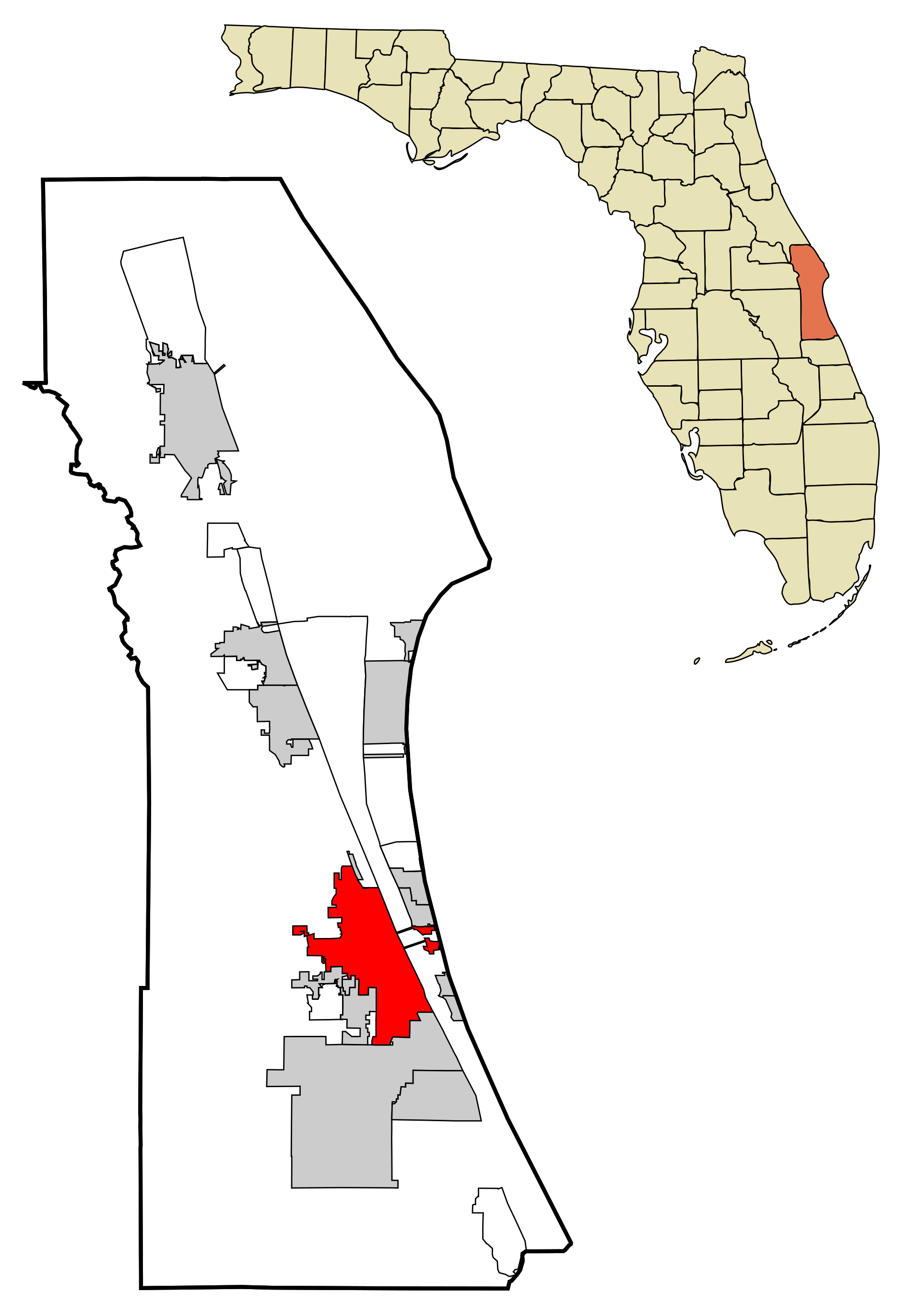
For Brevard residents, the Gleason holdings explain why so much of the developed land in Eau Gallie, Indialantic, Melbourne Beach, and parts of Melbourne proper trace title chains back to acquisitions made between 1865 and 1880 by a single politically connected Northerner. That’s most of the city. The footprint is huge.
Sources
- Florida Historical Quarterly, “Gleason and the Indian River Land Deals,” multiple issues 1923 through 1980, accessed 2026-01-20. https://stars.library.ucf.edu/fhq/
- Florida Memory Project, William H. Gleason papers and correspondence, accessed 2026-01-20. https://www.floridamemory.com/
- Brevard County property records, historical land patent index, accessed 2026-01-20. https://www.brevardfl.gov/
- Florida Supreme Court, In re Gleason (1868), impeachment proceedings record.
- US General Land Office, Florida tract books, 1865-1880.
- Bureau of Land Management, federal land patent search for William H. Gleason. https://glorecords.blm.gov/
Further Reading
As an Amazon Associate we earn from qualifying purchases.